
Menu
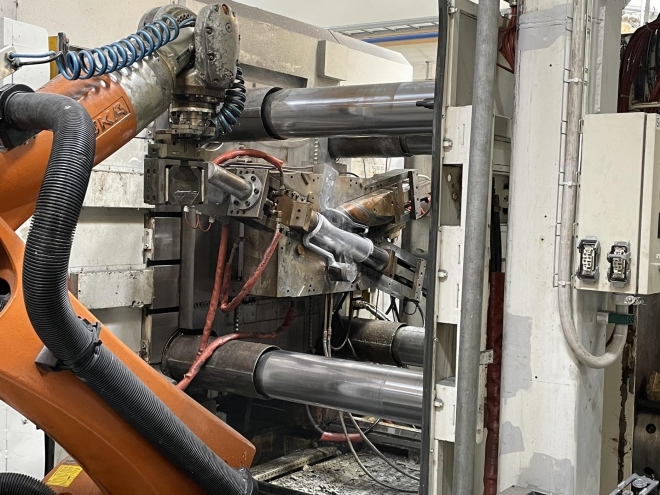
We offer high pressure die casting of prototypes and parts in aluminium, zinc and magnesium. With high capacity in our metal department, we can high pressure die cast parts with wall thicknesses from 1 mm and up to 21.8 kg with a clamping force of up to 1,350 T.
After high pressure die casting, we offer a wide range of post-processes, such as 3-5 axis CNC machining or impregnation, which are completed in our modern machine park.
If measurement and verification of the high pressure die cast parts are required, we can also take care of this in our measuring laboratory.
In close dialogue with the customer, we find the solution that best meets the requirements for costs, quantities and finish.
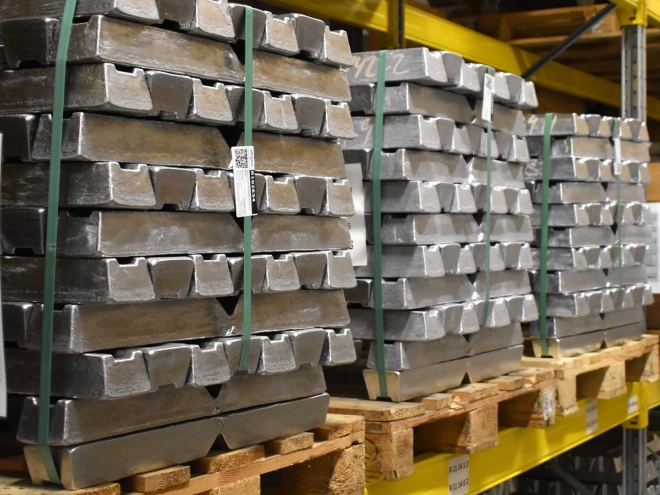
Aluminium is our most commonly used material. It's an affordable material that is easy to work with.
We stock a wide range of aluminium alloys, of which the most commonly used for high pressure die casting include:
Zinc is good for items that require fine tolerances and smaller wall thicknesses. It is durable, in some cases stronger than aluminium, and is therefore often used for fittings, hinges, etc. Our most commonly used alloy for high pressure die casting is:
Magnesium provides a nice finish and is lighter than aluminium. It is used in products where a lower total weight is required. Our most commonly used alloy for high pressure die casting is:
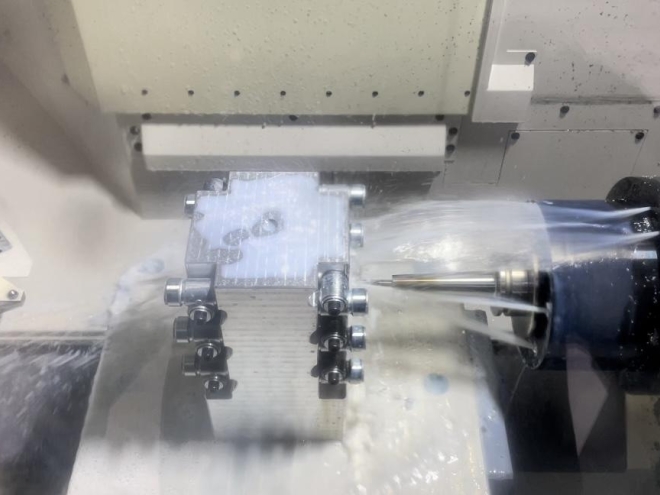
Get fine tolerances on high pressure die cast parts with CNC machining. In the machining department, we have six milling machines with 3-5 axis CNC machining:
On the left, CNC machining in a Makino a40se.
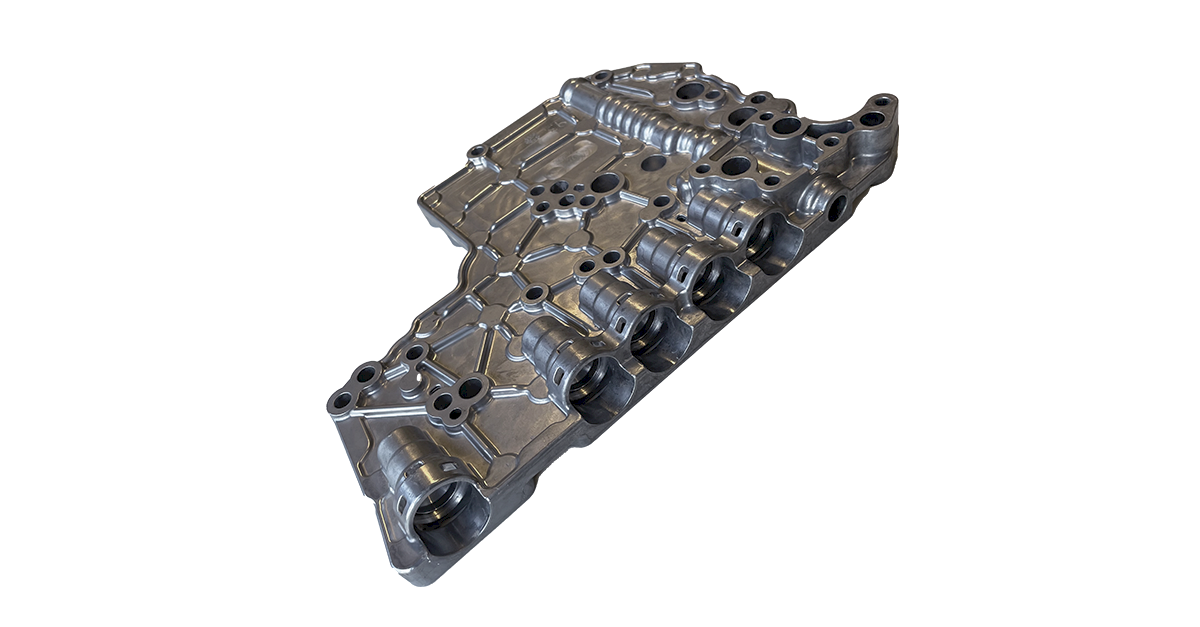
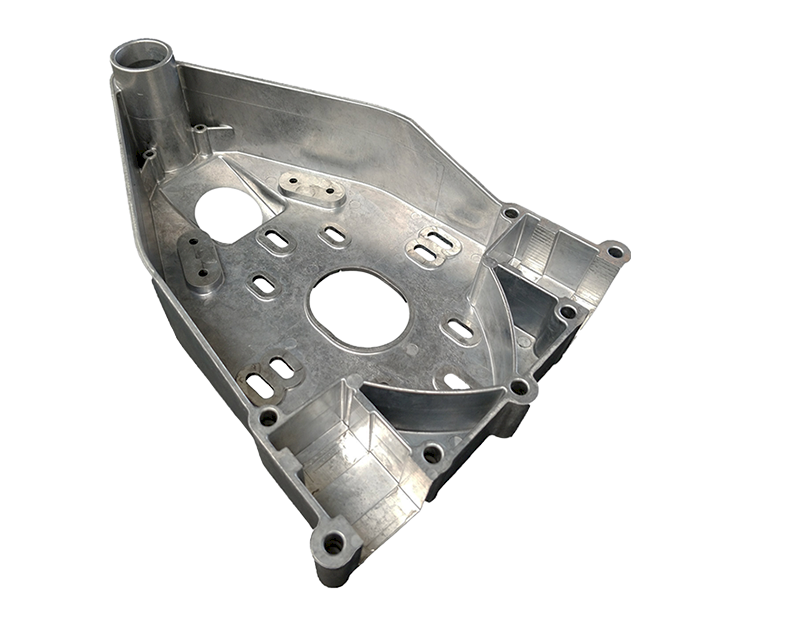
Material: Aluminium
Process: High-pressure die-casting
Purpose: Prototype
Dimensions:
Weight:
Clamping force:
Surface:
Material:
Process: High-pressure die-casting
Purpose:
Dimensions:
Weight:
Clamping force:
Surface:
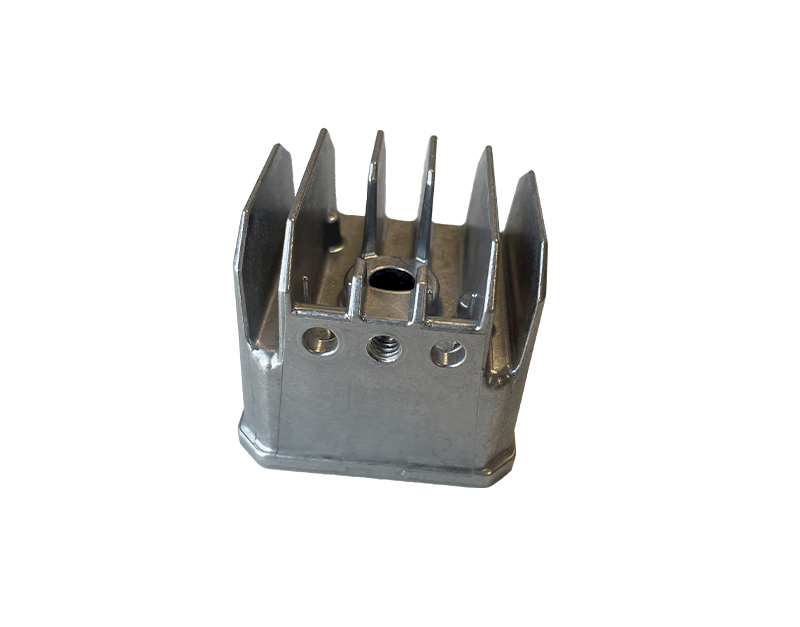
Material: Aluminium
Process: High-pressure die-casting
Purpose: Production
Dimensions:
Weight:
Clamping force:
Surface:
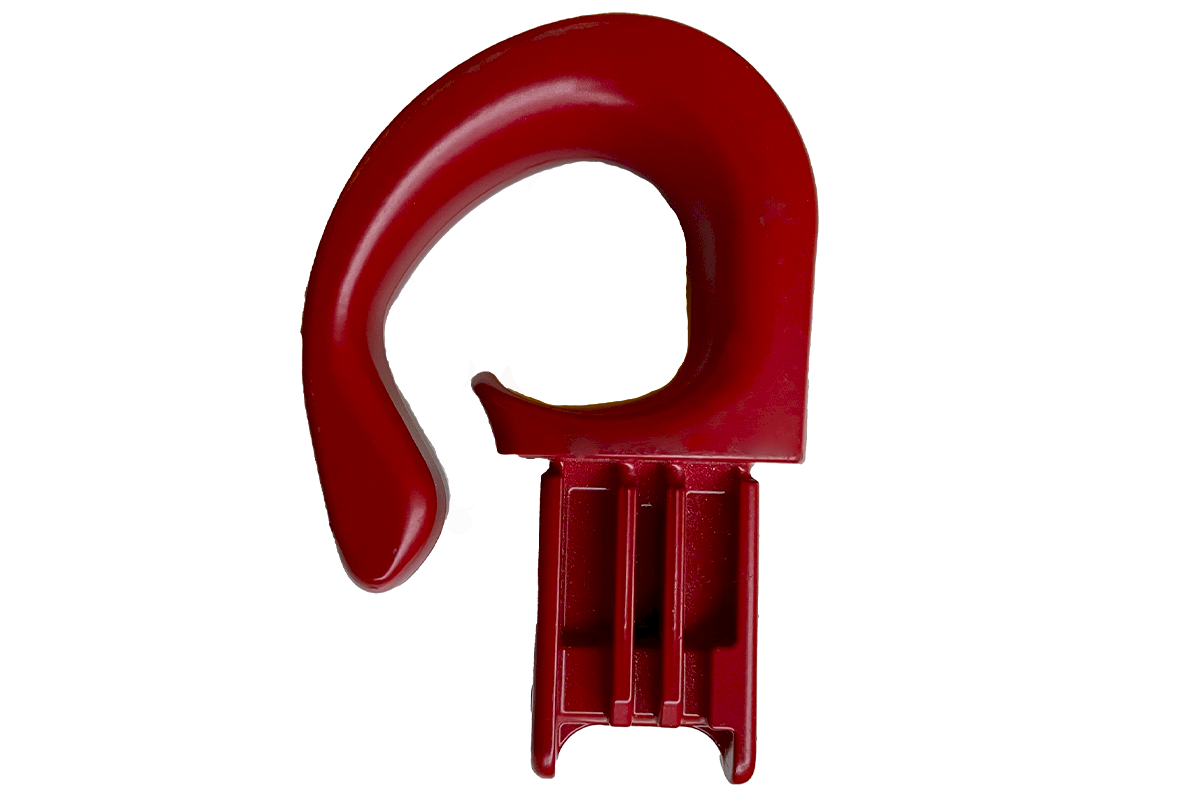
Material: Zinc
Process: High-pressure die-casting
Purpose: Prototype
Dimensions:
Weight:
Clamping force:
Surface: Paint
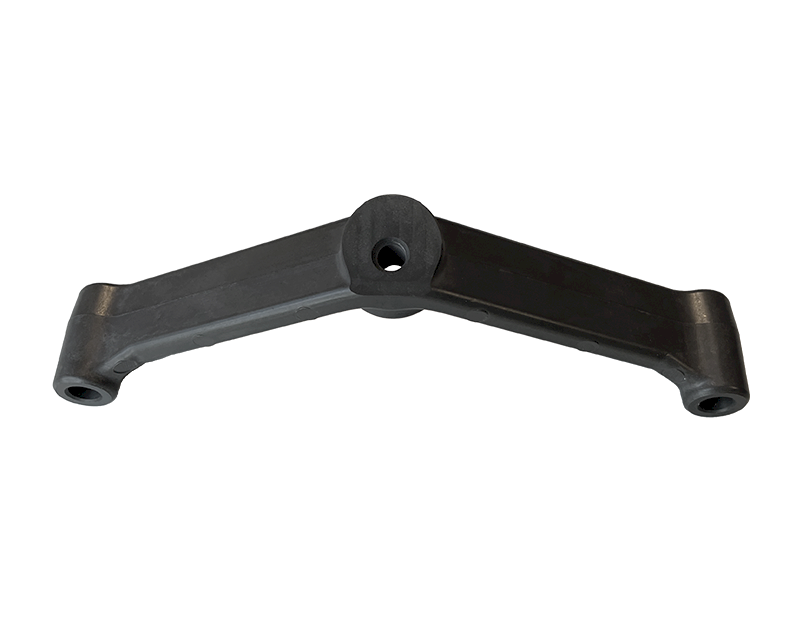
Material: Aluminium
Process: High-pressure die-casting
Purpose: Production
Dimensions:
Weight:
Clamping force:
Surface:
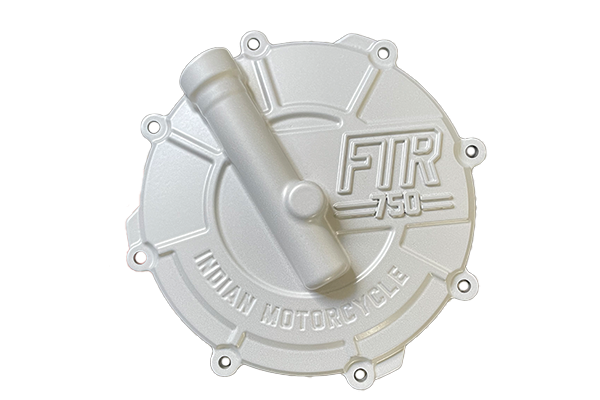
Material: Magnesium
Process: High-pressure die-casting
Purpose: Production
Dimensions:
Weight:
Clamping force:
Surface:
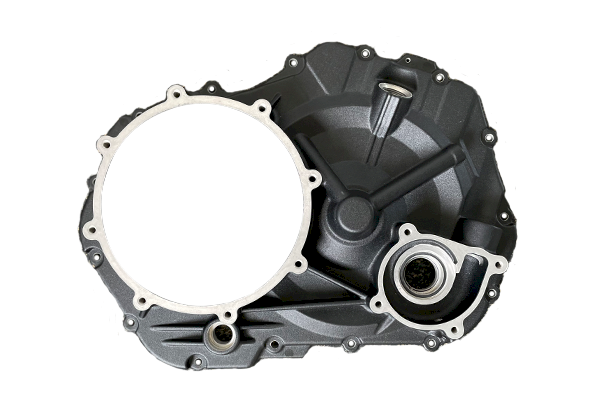
Material: Magnesium
Process: High-pressure die-casting
Purpose: Production
Dimensions:
Weight:
Clamping force:
Surface:
In our state-of-the-art CNC department, we offer this method where light metal parts are milled directly from the block.
This is perfect for complicated parts with fine tolerances, small piece counts and dropout samples. The method is often used for prototyping.
We recommend choosing high pressure die casting and machined from block for light metal prototypes.
In rare cases we also offer investment casting if the quantity is low and the part complicated to manufacture with traditional casting methods.
Idé-Pro offers high pressure die casting (HPDC) of technical parts in aluminium, zinc and magnesium. We cast parts with wall thicknesses from 1 mm and up to 21.8 kg, with a clamping force of up to 1,350 T.
Beyond the casting itself, Idé-Pro provides a broad range of post-processing services in-house, including 3- to 6-axis CNC machining, impregnation and surface treatment, as well as verification in our own metrology laboratory.
Idé-Pro offers high pressure die casting (HPDC) in aluminium, zinc and magnesium. Aluminium is the most widely used material for die casting – it is cost-effective and well-suited for complex geometries and thin wall thicknesses. Zinc is well-suited for HPDC of parts requiring tight tolerances and high wear resistance, such as brackets and hinges. Magnesium is used for die casting where low total weight and a high-quality surface finish are essential.
Idé-Pro manufactures tools for high pressure die casting (HPDC) in-house. A tool is the mould used in the production process and consists of a fixed and a moving part. For die casting, the tool is made from semi-hardened or hardened steel, depending on requirements including volume and tool life. Molten metal is injected under high pressure into the cavity and solidifies under pressure, after which the tool opens and the part is ejected.
Yes. Idé-Pro manufactures tools for high pressure die casting (HPDC) in semi-hardened and hardened steel in-house in our own tool shop. The facility is equipped with fully automated milling machines and robots, and we have the capacity to produce up to 20 tools per week across injection moulding, die casting and EPS/EPP moulding.
We can machine tools up to 2,100 x 4,000 x 1,200 mm and up to 20 T. Because tool manufacturing and die casting are gathered under one roof in Skive, transit time between departments is measured in minutes – not days.
Lead times for high pressure die casting (HPDC) of prototypes vary depending on the scope of the project. Idé-Pro's standard lead times after approval of a 3D file are as follows:
The price of high pressure die casting (HPDC) at Idé-Pro varies from project to project and depends on factors such as material, alloy, part geometry, volume, tolerance requirements and any post-processing. We always find the solution that best meets requirements for cost, volume and finish.
Idé-Pro has extensive experience in product development and part optimisation for high pressure die casting (HPDC), including part design, material selection and tool design. We apply Design for Manufacturing (DFM) principles, identifying early in the process whether a part is optimally designed for die casting, and advise on changes that can improve manufacturability, strength or cost-efficiency. Idé-Pro can act as a development partner from the early development phases through to series production.
Idé-Pro's high pressure die casting (HPDC) facility is located in Skive, Denmark. The die casting facility and CNC machining are gathered under the same roof as our in-house tool shop, injection moulding and EPS/EPP moulding. This ensures short lead times and high flexibility across processes.
Idé-Pro supplies high pressure die cast parts to customers worldwide across industries such as automotive, energy, consumer, food/farming and hi-tech. We have experience with technical parts for demanding applications, including parts with high requirements for strength, corrosion resistance and surface finish. Regardless of which industry you operate in, Idé-Pro can support your die casting needs.
Yes. Idé-Pro is certified by Force Certification under ISO 9001 for the development and production of die cast light metal, and under ISO 14001 and ISO 50001 for environmental and energy management.