
Menu
In injection moulding, parts with big wall thicknesses or large surface areas can present technical challenges. When material accumulates in one area, there is an increased risk of uneven cooling, internal stresses and sink marks. This can affect both the surface finish and the part’s shape over time.
Particularly with larger parts, there are high demands on how the material is distributed and stabilised within the tool. In such cases, gas injection moulding can be used to control how the plastic behaves during filling and cooling.
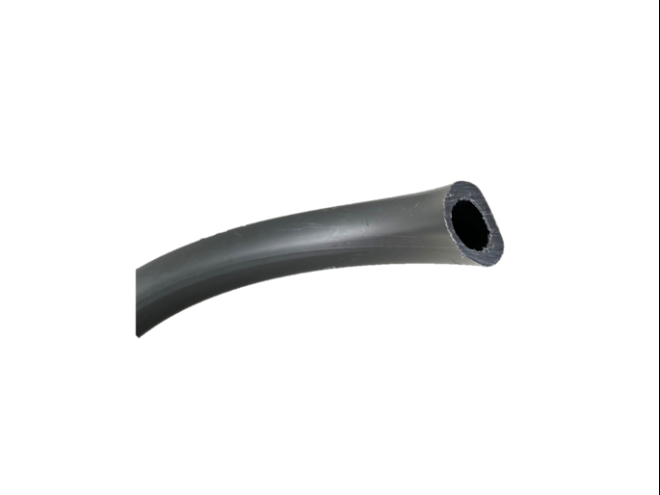
Gas injection moulding is a specialised injection moulding technique in which nitrogen is injected into the plastic melt inside the tool during the moulding cycle.
Molten plastic is injected into the tool cavity. Once a specific amount of material has filled the tool, nitrogen gas is injected through special gas nozzles or valves. The gas penetrates the still-molten plastic core and forms internal channels.
The gas pressure pushes the material against the tool walls and is kept active during part of the cooling phase. Once the plastic has solidified sufficiently, the gas is vented and the part can be demoulded.
When nitrogen is injected, it penetrates through the part of the plastic with the least resistance, usually the hottest and most fluid core. This creates controlled hollow sections within the part's internal structure.
At the same time, the plastic material is pressed outwards towards the tool walls and, during cooling, the gas pressure influences how the material is distributed and stabilised until it solidifies.
The result is a strong, lightweight and hollow or partially hollow part with little risk of sink marks or warping.
When used in the right context, gas injection moulding offers a number of advantages in terms of production and design.
The hollow sections mean that less plastic is used per parts compared with traditional designs. This can reduce both weight and material costs, particularly in larger parts.
As the nitrogen pushes the material towards the walls of the tool, it is distributed more evenly, reducing the risk of warping and distortion. In addition, the pressure during cooling also helps to ensure a more even distribution of the material.
The combination of a solid outer structure with a hollow core provides good durability in the part, which is beneficial when working with larger parts.
As the solid core is reduced, the cooling process is more efficient than with fully moulded parts of the same external dimensions.
Gas injection moulding is ideal for large-scale parts or partrs with big wall thickness, which can pose challenges in terms of weight and dimensional stability.
The technique is often used for:
And technical plastic parts where a combination of good durability and reduced weight is important.
To achieve reduced weight, you can also choose injection moulding with Ku-Fizz.
Idé-Pro has experience in advanced injection moulding, where process control and tool design are essential for the final result. Gas injection moulding places specific demands on tool design and gas control.
With modern machinery and extensive expertise in injection moulding, we handle both prototypes and series production with thorough quality control.
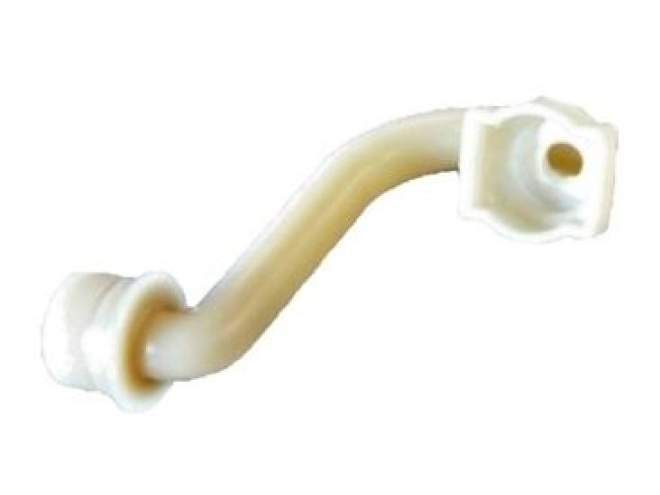
Are you unsure whether gas injection moulding is the right process for your plastic part? We can help you evaluate all the options so that you choose the right technique from the start.
Contact us and we’ll review your design and discuss how it can be optimised to achieve a successful end result.