
Menu
In modern industrial production, demands for tolerances, durability and lightweight design are higher than ever.
One of the most prominent methods for meeting these demands is high pressure die casting, a method where complex light metal parts can be cast as prototypes or production parts. The tool is adapted according to the volume to be cast.
High pressure die casting is now a key part of the manufacturing process for everything from automotive components to electronic parts.
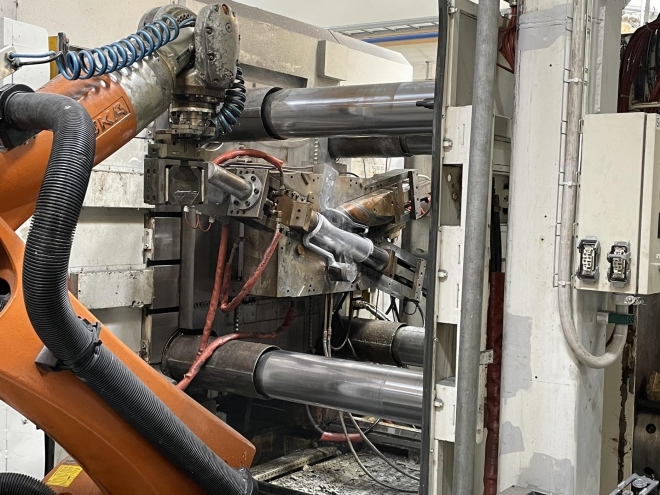
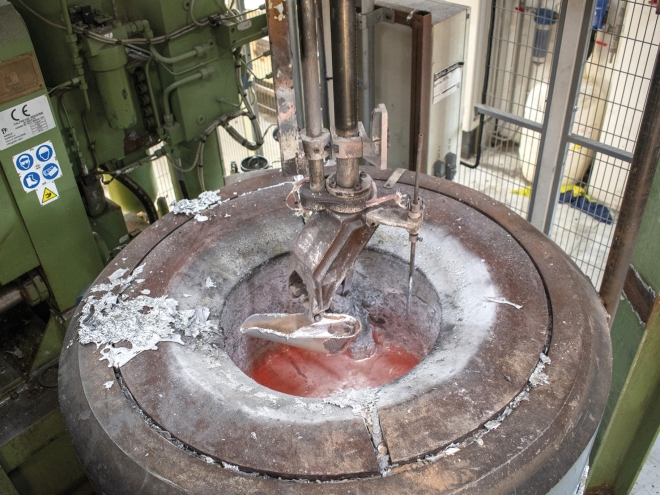
High pressure die casting involves injecting molten metal into a steel tool under extremely high pressure. The tool cavity is filled rapidly, which is essential for accurately replicating complex geometries and thin wall thicknesses.
Once the tool is filled, the pressure is maintained during the material’s solidification phase. This ensures that the part maintains the desired dimensions. The process enables consistent and repeatable production of light metal parts.
The choice of material is essential for the mechanical properties and intended use of the part. In high pressure die casting, aluminium, zinc and magnesium are among the most common materials, all of which Idé-Pro works with.
Aluminium is the most commonly used material due to its excellent balance between cost, weight and manufacturability.
By using alloys such as AlSi12(Fe), it is possible to cast complex shapes with wall thicknesses as thin as 1 mm.
It offers good corrosion resistance and stability, making it ideal for applications within the automotive industry as example.
For parts that require tight tolerances and very thin wall thicknesses, zinc is often the best choice.
Zinc’s high density and wear resistance make it a good option for parts that are subject to mechanical wear, such as fittings and hinges.
The ZA5 alloy is the standard here for achieving durable parts with precise dimensions after high pressure die casting.
When every gram counts, magnesium high pressure die casting is the best choice. It is the lightest of the most commonly used materials and produces an excellent surface finish straight from the tool.
The AZ 91 alloy is often used when a combination of low weight and a high-quality finish is required.
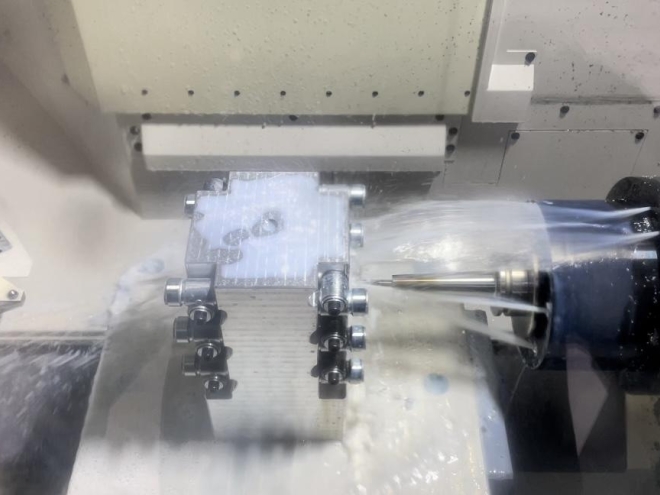
Although high pressure die casting provides good results straight from the casting process, many parts require further machining. To meet requirements for tight tolerances or specific functional surfaces, CNC machining is often needed after casting.
With 3- to 6-axis CNC machining, tolerances can be fine-tuned to the micro level and precise holes drilled for threads. To ensure quality, you can choose to have the parts inspected in a measurement laboratory, where their dimensions are compared with the drawing. The parts are then either ready for assembly or sent on for further finishing processes such as painting.
One of the biggest challenges in product development is ‘time-to-market’. By die-casting prototypes in tools made of case-hardened steel, it is possible to produce functional parts that have exactly the same properties as the final product. This makes it possible to test material choice, design and sales potential under realistic conditions at a lower cost compared to high pressure die casting in traditional hardened steel tools.
Overall, high pressure die casting offers a unique combination of design freedom, even for complex geometries, production efficiency, dimensional accuracy and stability, as well as recyclability. Whether the goal is to reduce weight with magnesium, achieve tight tolerances with zinc or produce cost-effective aluminium components, high pressure die casting is the key to manufacturing the technical parts of tomorrow.
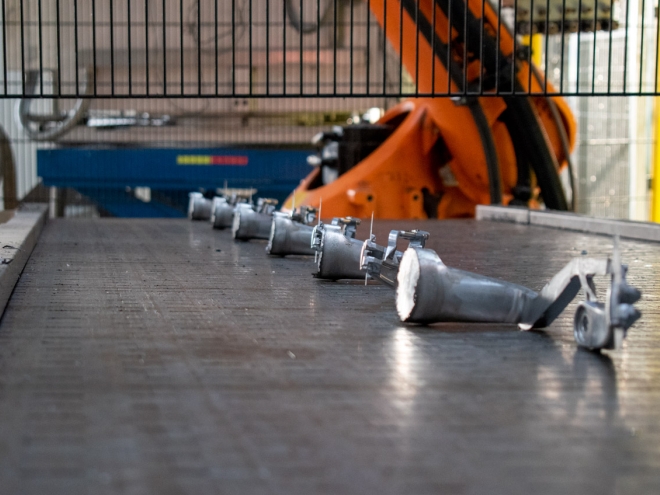
Idé-Pro has many years of experience and technical expertise in high pressure die casting for both prototype production and low-volume production. With our modern machinery and in-house tool manufacturing, we can offer short lead times and high flexibility.
We can guide you through the entire process, from material choice and design optimisation to the finished part, to ensure that all requirements are met. Contact us today for technical advice, or request a quote.